
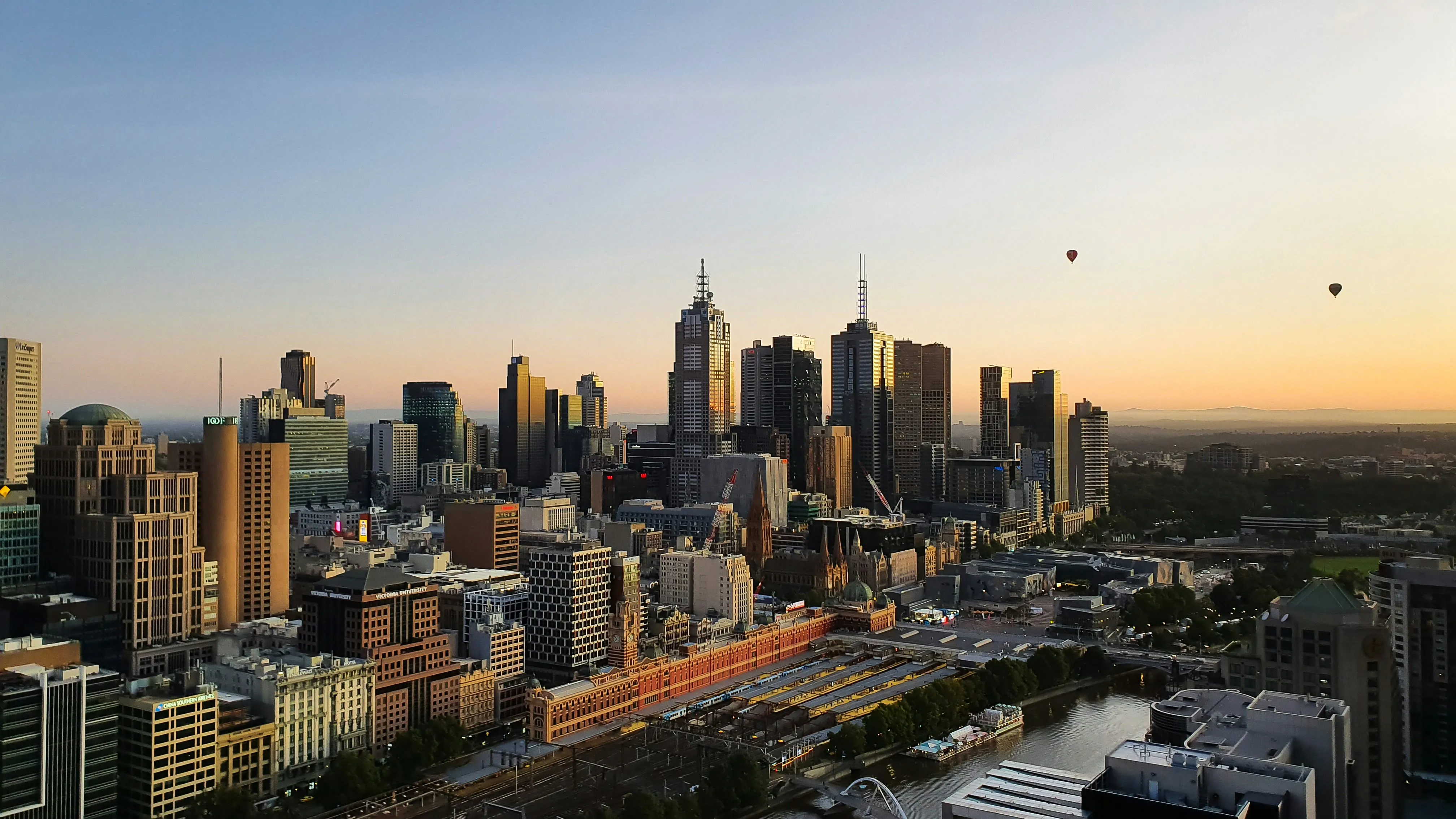
Best Places to Stay in Melbourne
Most of Melbourne’s best areas to stay sit a brief tram ride from the CBD, so the decision comes down to what you want from the trip. Fitzroy is the pick for bars, shops and a thriving artistic community. St Kilda hosts Melbourne’s most famous beach. Richmond sits adjacent to Melbourne’s sports precinct. A densely connected tram network links them all, so you’re able to hop around Melbourne enjoying all the city has on offer.
For most first-time visitors and short stays, the CBD is the best area to stay in Melbourne. Theatres, laneways, cafes, restaurants, and nationally renowned shopping streets are within walking distance, and trams inside the Free Tram Zone cost nothing. You can enjoy your time in the city without having to plan based on public transport.
Which area of Melbourne suits your trip
A central base works best if you want to see as much of the city as possible in a few days. A suburb-specific stay works best if one interest, such as food, the beach or a game at the ‘G, shapes most of your plans.
- First visit or short stay: the CBD, where sights are a walk or a free tram ride away.
- Food and bars: Fitzroy and Collingwood.
- Families: South Melbourne for city access, or Werribee for an estate break with the zoo nearby.
- Couples: the CBD.
- Beach: St Kilda.
- Sport and events: Richmond.
- A weekend away without leaving Melbourne: Werribee.
Melbourne CBD
More Australians take a trip to Melbourne than to any other city in the country, 3.5 million of them in the March 2025 quarter alone, and the CBD is where most of them stay. For a first time visit or a short return trip, the CBD is arguably the best area to stay in Melbourne, as almost everything on a typical itinerary is within walking distance.
The CBD is the hub of the tram and train network, so everywhere else in this guide is a short trip. Carlton and Fitzroy are 10 to 15 minutes by tram, Richmond and South Yarra five minutes by train from Flinders Street, and St Kilda about 25 minutes on the 96 tram. Trams within the city grid are free, so nothing in the CBD itself needs a ticket.
Famed Laneways and Coffee
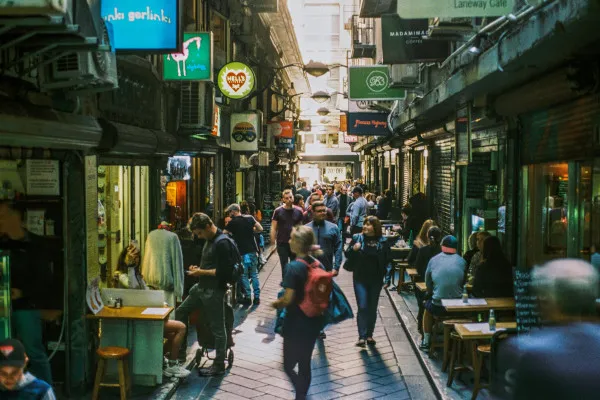
Melbourne is celebrated around the world for its vibrant laneway culture, always adorned with incredible street art. Hosier Lane, opposite Federation Square, a prime example, repainted so often that the walls look different from one visit to the next, and AC/DC Lane and Duckboard Place carry it on around the corner.
Degraves Street and Centre Place are the cafe laneways, tables wedged into the gaps between buildings. The coffee has credentials to back up the reputation: Food & Wine named Melbourne the top international city for coffee in its 2025 Global Tastemakers awards.
Incredible Dining
Crossley Street in Melbourne has become one of the best places in the city to eat. Super Taco, a few doors down, opened in July 2026 and has had queues since: four tacos on tortillas pressed on site, a self-serve salsa bar, and a sell-out most days.
Across the lane, Côte Basque took over the old Becco site this winter and cooks most of its menu over wood and charcoal, Basque in spirit rather than imitation, for the nights you want something more considered.
Pellegrini’s is a minute away on Bourke Street for an espresso at the bar, and Chinatown starts at the end of the street.
Theatre and Live Music
The East End theatre district is the reason this corner of the city stays bustling after dark. Her Majesty’s Theatre and the Comedy Theatre face each other on Exhibition Street, the Princess Theatre is around the corner on Spring Street, and the Regent and the Athenaeum are a short walk down Collins Street, so most of the big musicals and touring plays land within five minutes of Crossley Street.
For live music, the Forum on Flinders Street is a quick walk away, and the Comedy Festival takes over all of them every March and April.
Art Galleries
Both halves of the National Gallery of Victoria are within walking distance. NGV Australia, at the Ian Potter Centre in Federation Square, holds the Australian collection, and NGV International on St Kilda Road is across the river from it, five minutes further on.
General entry to both is free, and NGV International has hosted major exhibitions of Andy Warhol, Keith Haring, Jean-Michel Basquiat and Picasso in recent years. ACMI, the screen and film museum, sits next to NGV Australia in Federation Square if the weather turns.
Shopping
Bourke Street Mall has Myer and David Jones, and Melbourne Central, Emporium and QV sit a block north of it, linked by walkways so you can move between them without going outside. The Paris end of Collins Street, a few minutes from Crossley Street, is where the luxury houses are, Chanel, Louis Vuitton and Hermès among them. The Block Arcade and Royal Arcade, both from the 1890s, are worth walking through even if you buy nothing: mosaic floors, glass roofs and the Hopetoun Tea Rooms.
Where to Stay in Melbourne’s CBD
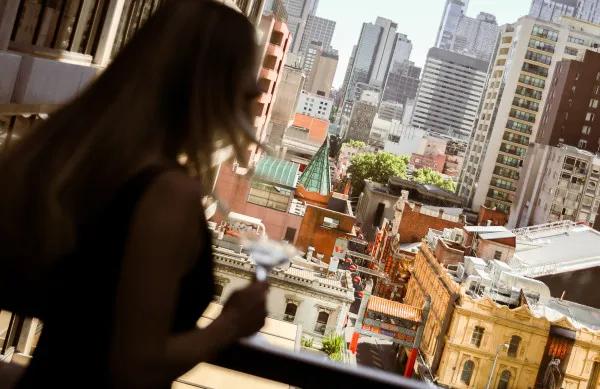
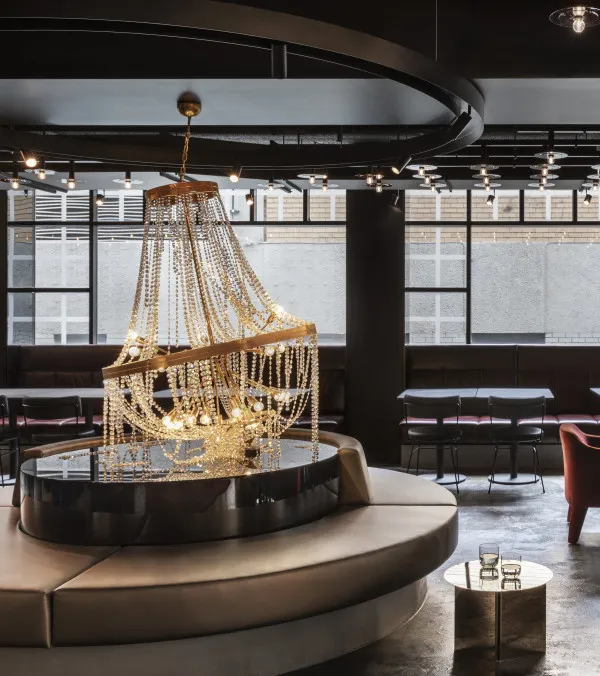
If you’ve settled on the CBD, the next question is where to stay? Lancemore Crossley St. is a 112-room hotel in an original Graeme Gunn building, with interiors by Carr Design Group and art through every floor.
The Rooftop Terrace looks across the city skyline, the Lobby Bar does coffee by day and a nightcap after the show, and Stretch on Six covers the gym. Everything in this section is within a 15 minute walk of the front door, and most of it within five.
For a first day, stay on foot and work through the cultural quarter around the hotel. The 48 Hours in Melbourne's Cultural Quarter post sets out a route.
South Melbourne
Ten minutes from the CBD on the 96 tram, South Melbourne sits close to the city without being in the heart of it. Originally named Emerald Hill, a key feature of its architecture is the streets lined with Victorian terraces and the wonderfully designed Old Town Hall.
South Melbourne Market has traded since 1867 and opens Wednesday, Friday and weekends. The dim sim stall has been there since 1949 and is the reason most locals go, with Clarendon Street’s cafes and shops a block away for everything else.
Albert Park Lake is a 10 minute walk for the five kilometre loop, playgrounds along the water and, each March, the Grand Prix.
Who South Melbourne suits: families, and anyone on a longer stay who wants a quieter, more local feel at night with the city a short tram ride away.
Fitzroy and Collingwood
Fifteen minutes from the CBD on the 11, 86 or 96 trams, Fitzroy was Melbourne’s first suburb, laid out in 1839, and its neighbouring suburb Collingwood runs into it on the eastern side. Time Out named Smith Street, the border between the two suburbs, the coolest street in the world.
Brunswick Street and Smith Street carry the densest run of bars, restaurants and live music venues in the city, with Gertrude Street the quieter, more elevated strip between them. The Tote and the Night Cat are the great venues to see live bands, while Naked for Satan has a rooftop bar with a sprawling view of the city.
Outside of nightlife, the Rose Street Artists’ Market runs every weekend, and the shopping along Brunswick and Gertrude Streets ranges from considered boutiques to a plethora of vintage and second-hand clothing stores. More street art covers the side streets, and Edinburgh Gardens at the northern end is where the locals go on a sunny afternoon.
Who it suits: food, bars and music, and anyone happy to trade quiet nights for being in the middle of it. Light sleepers on Brunswick Street weekends should pick a side street.
Carlton
A 10 minute walk or a short tram ride north of the city grid, Carlton is where Melbourne’s Italian community settled after the war, and Lygon Street is where the city’s coffee culture began. Toto’s, Australia’s first pizzeria, has been on the strip since 1961.
Lygon Street is still the main draw, lined with Italian restaurants, cafes and gelato, along with Readings bookshop and one of Melbourne’s favourite boutique cinemas, Cinema Nova.
Carlton Gardens sits a block east, with the Royal Exhibition Building, the first building in Australia to be World Heritage listed, and Melbourne Museum beside it.
The University of Melbourne gives the surrounding streets a youthful feel, and the terraces and tree-lined streets off Lygon make it one of the easier suburbs to walk.
Who it suits: food and a slower, walkable stay close to the city, and families on a museum day.
St Kilda
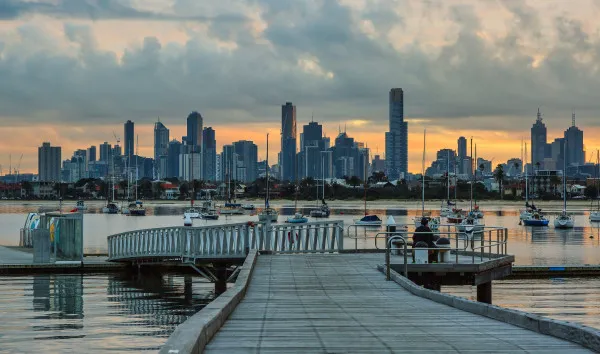
Twenty-five minutes from the CBD on the 96 tram, St Kilda is Melbourne’s iconic beach suburb and has been since the 1850s. Luna Park opened on the foreshore in 1912, and its Scenic Railway is the oldest continuously operating roller coaster in the world.
The beach, the pier and the Esplanade are a great reason to stay in St Kilda. The Sunday Esplanade Market has run for more than 50 years, a colony of little penguins lives in the breakwater at the end of the pier and comes in at dusk, and Acland Street’s cake shops, Monarch among them, are a Melbourne institution.
For evenings, the Palais Theatre has hosted touring acts for almost a century and the Espy, across the road, is one of the city’s best-known live music pubs.
Who it suits: summer trips, anyone who wants the water close, and families with Luna Park on the list.
South Yarra and Prahran
Five minutes from Flinders Street by train, or 15 on the 78 tram, South Yarra and Prahran share Chapel Street, one of the longest retail strips in the country. Prahran Market at the southern end is one of Melbourne’s oldest, and the stalls are a great first stop for fresh produce and artisanal goods.
Chapel Street changes character as you walk it. The South Yarra end is dominated by fashion boutiques, cocktail bars and the restaurants people book weeks in advance, and the Prahran end is occupied by vintage stores, independent designers and unassuming places to eat. After dark it is also home to some of Melbourne’s best nightlife, including a few of the city’s most iconic nightclubs.
The Royal Botanic Gardens are on the northern edge of South Yarra, 38 hectares of lawns and lakes that make a morning walk or a picnic easy to fit in before lunch.
Who it suits: shopping, long lunches and dinner bookings by day, and a big night out.
Richmond
Five minutes from Flinders Street by train, Richmond sits beside Melbourne’s sports precinct: the MCG, Melbourne Park and AAMI Park are all a walk across Yarra Park from Richmond station. The MCG holds just over 100,000 people, the largest stadium in the country.
For an AFL game, the Boxing Day Test, the Australian Open or a stadium concert, staying here means walking to the gate and walking home afterwards, skipping the crush on the trains back to the city.
Richmond more than holds its own on the days in between. Swan Street is a hot spot for pubs, wine bars and restaurants before and after games, Bridge Road mixes clothing stores with cafes and furniture showrooms, and Victoria Street is Melbourne’s best-known strip for Vietnamese food.
Who it suits: sport and events, and anyone who wants a pub-and-restaurant suburb with the city five minutes away.
Werribee, for a Weekend that Doesn't Feel Like the City
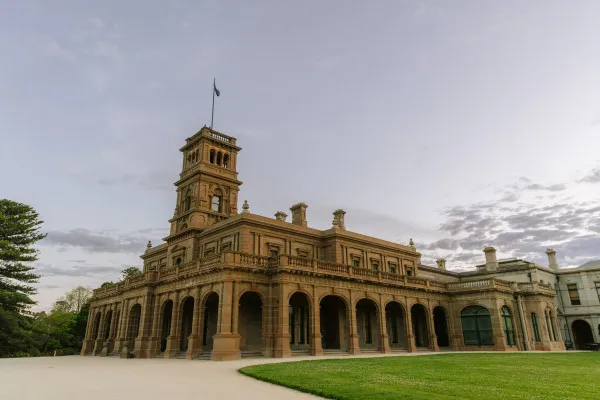
Thirty minutes west of the CBD, Werribee is the one option on this list where the stay is the plan rather than the base. The Chirnside brothers built Werribee Park Mansion in 1877 as the centrepiece of their pastoral empire, and it is still one of the largest private residences ever built in Victoria.
Lancemore Mansion Hotel Werribee Park sits beside the mansion, not inside it, in 10 acres of formal English gardens. A weekend runs on what is on the estate: Joseph’s for dinner, L.M. Spa for an afternoon, a 17 metre heated indoor pool, and a snooker room and library for the evening.
Werribee Open Range Zoo is next door, and the Victoria State Rose Garden and Shadowfax Winery share the parkland, so a full day happens without getting back in the car.
Who it suits: families, with the zoo and the pool covering a day each, and anyone after a reset weekend that still has Melbourne half an hour away.
Wherever you end up staying, Melbourne is an easy city to enjoy, and every area on this list has enough going on to fill a few days. Each suburb above has its own character, and none of them is far from the others.
Frequently asked questions
Where should first-time visitors stay in Melbourne?
Melbourne’s CBD. Most sights are within walking distance and the Free Tram Zone covers the grid, so you can get around with ease, while also having all other suburbs on this list nearby.
How easy is it to get around Melbourne without a car?
Extremely easy! Trams reach every area in this guide, most within 20 minutes of the CBD, and trains cover Richmond and South Yarra as well. A well-run bus network fills in the gaps for anywhere the trams and trains don’t reach. A car could help for Werribee, but even without one a train runs there from the city.
Which area is best for families?
South Melbourne for easy city access, the market and Albert Park Lake, or Werribee for a weekend on one estate with the pool, the gardens and the zoo next door.
