How Much Does Conference Venue Hire Cost in Australia?
The short answer: it varies widely. Room hire alone runs from roughly $400 to $800 for a small boardroom seating four to ten people, scaling up to $4,000 or more for spaces that hold 120-plus. As a national average, expect around $84 per hour or $410 to $430 for a full day of room hire before any extras.
But those numbers mean little in isolation, as different venues have varying levels of base inclusions. Once you factor in catering, AV, and other inclusions, combined totals typically land around $1,800 to $2,600 for a group of 20, $4,000 to $6,000 for 50 people, and $7,500 to $11,500 for 100.
Day delegate packages, which bundle the room, catering, and basic AV into a per-person rate, generally start from $100 to $120 per person and reach $200 to $220 per person at the premium end.
What you pay tends to track closely with the quality of the venue and the level of service; keep in mind that should you aim to negotiate a rate further, you are usually compromising on something, whether that's the catering, the AV, or the venue itself.
Keep in mind, these are broad estimates. Every venue prices differently, and the gap between an out-of-the-box CBD hotel function room and a purpose-built regional retreat conference venue can be notable.
Conferences are a genuine business investment, and for many organisations it's a key point in their organisations calendar. However, for those weighing up its value, it's worth knowing upfront that a well-run offsite tends to earn its place. More on that further down.
According to Tourism Research Australia, business events visitors spent $17.2 billion in Australia over the past year. One useful reframe for budget planning: real booking data shows that 60% of confirmed conference bookings are for groups of 20 people or fewer. Most teams aren't filling ballrooms. They're running focused offsites, and the cost profile looks quite different at that scale.
What Are The Key Costs Of A Conference?
Most standard quotes cover the same baseline: the room itself, basic AV (usually a projector, screen and microphone), and Wi-Fi access. Beyond that baseline, everything else is typically an add-on, which is where catering and the other line items below come in. There are options, such as those provided by the Lancemore Group, that offer a range of conference venues that provide all-inclusive quotes and packages.
Catering is usually the largest single line item after room hire, and the range comes down to how much you want the food itself to be part of the day. Morning or afternoon tea runs $12 to $16 per person for a straightforward spread, or up to around $25 to $30 per person for a more considered selection. A sit-down or buffet lunch sits around $28 to $35 per person at the accessible end, stretching to $50 to $55 per person for a more elevated menu.
A full-day catering package covering both tea breaks and lunch lands between $50 and $75 per person for solid, reliable catering, or $90 to $100-plus per person where the catering is meant to be memorable in its own right.
Neither end is the wrong call, a simpler spread does the job efficiently for a large group, while a more considered menu turns the day into more of an occasion. These costs add up fast with larger groups, which is why day delegate packages exist. They roll room hire, catering, and basic AV into a single per-person rate, making it easier to forecast spend early.
For teams planning a multi-day offsite with overnight stays, the pricing model shifts, this isn't a room and a lunch anymore, it can also be multiple nights of accommodation, every meal, meeting space and on site amenities all bundled together.
Residential conference packages built this way move into a different bracket altogether, thousands of dollars per person rather than hundreds, with the exact figure depending heavily on the property, the length of stay, and the level of inclusions.
We've broken down real numbers for this format in more detail in a separate guide on the hidden costs of city conferences, worth a look if you're leaning toward a residential retreat.
As a rough per-night guide, accommodation-inclusive pricing moves with demand. Any month that includes school holidays tends to carry a floor of around $250 per person, while March and November, the peak conference months covered above, don't go below $500 per person.
It's worth factoring in early if you're weighing a single-day CBD conference against a multi-night regional package, as the accommodation component alone can be a meaningful share of the total. It's also where properties with accommodation already on-site, such as Lancemore's five regional conference venues, work out easier to manage and budget for than coordinating a conference venue and hotel bookings separately.
The distinction matters for budgeting. A single-day conference in a CBD venue and a two-night residential conference at a regional property are different products with different cost structures. Knowing which format suits your group narrows the pricing conversation quickly and helps you compare quotes on a like-for-like basis. Neither one is the better choice by default, a sharp single-day session can be exactly what a project needs, while staying on-site for a few days earns its higher cost when the goal is deeper, sustained focus away from the office.
Important Considerations Before You Book
Depending on where you book, the quoted price can vary from your final bill. Watch for charges that sit outside the initial proposal: AV equipment beyond a basic projector and screen, corkage on beverages, room setup or teardown fees, Wi-Fi access for delegates, and overtime charges if your session runs long.
The best way to pre-empt this issue is to internally finalise a list of exactly what you need for your event, then work backwards and see what is included in your initial offering.
Some venues also apply minimum spend requirements on weekends or peak dates, which can push costs above the per-person estimate you budgeted around.
This is exactly the guesswork an all-inclusive quote is designed to remove. Lancemore's conference venues quote everything from the outset, room, catering, AV, amenities and accommodation, so what you're given upfront is what lands on the invoice. That sure-knowledge also assists with a faster internal approval process.
Several factors swing the total cost in either direction. Group size is the obvious one, but date selection matters just as much. Conference enquiry and booking volume peaks in February and March, with planners typically starting their search from November for the following year. Booking outside those peak windows, or mid-week rather than on a Friday, can potentially improve your quoted rate.
As a rule of thumb, aim to start the conversation nine to six months out. If your dates fall in February or March, push that closer to six months, since that's when the best regional properties book out first.
Before signing anything, ask the venue to confirm exactly what's included in the quoted rate and what attracts additional charges. Ask about cancellation terms, minimum delegate numbers, and what is included versus what needs to be outsourced. A venue that answers these questions clearly upfront is far less likely to surprise you on the final invoice.
Why Bother With an Offsite Conference Venue?
Given the costs involved, it's a reasonable question. The honest answer is that the cost of a conference or offsite tends to show up as a line item, while the value it creates is harder to put a number on, but it is real.
Getting a team in the same room, away from their desks and the daily churn of Slack messages and back-to-back calls, tends to speed up decisions that would otherwise drag out over weeks or months via email. It's also one of the more reliable ways to rebuild morale and culture in a hybrid team that doesn't see each other in person often.
It's also one of the few genuine chances to step back from the day-to-day and look at the bigger picture, where the business is actually heading over the next three, five or ten years, and whether what's in place gets you there. These are the difficult conversations that benefit from being removed from the day-to-day and given sole focus, which matters even more for C-suite, executive and leadership teams who don't always get the chance to be in the same room together.
None of that means every meeting needs an offsite. But for the decisions and milestones that actually warrant getting everyone together, the spend usually earns its place, whether that's driving strategy forward or, just as validly, marking a genuine win when the business has had a strong year. Businesses that start running company or industry conferences also tend not to stop at one, once the value shows up in the room, it tends to earn a permanent spot on the calendar rather than staying a one-off.
What Makes A Good Conference Venue?
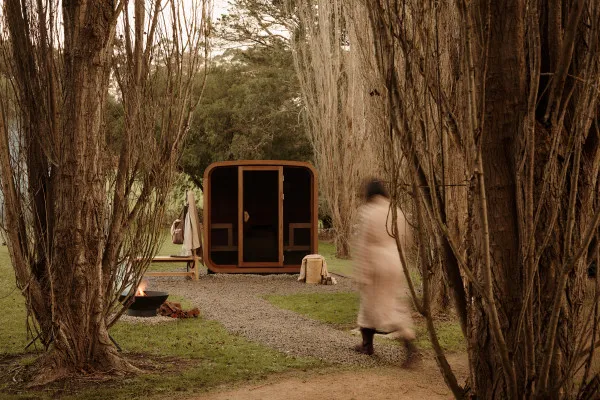
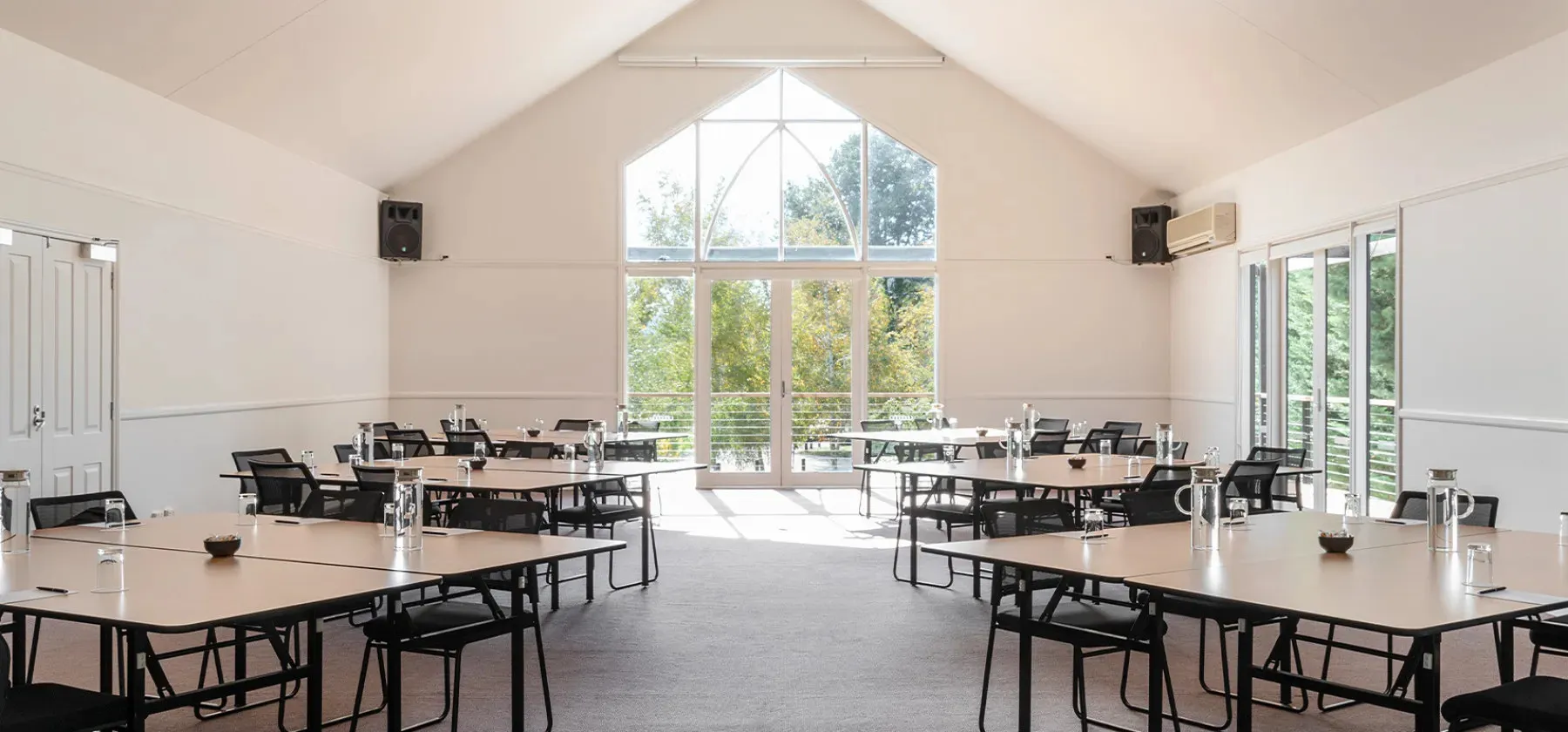
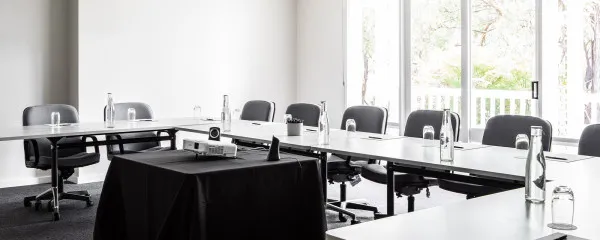
The right venue removes friction from your event rather than adding to it. Start with the basics: the space needs to fit your group comfortably in the format you're actually using, whether that's theatre-style presentations, boardroom discussions, or workshop breakouts. A room that technically holds 100 people but feels cramped at 60 is the wrong room.
Beyond capacity, look for practical things that affect how your day runs. Reliable tech and Wi-Fi should be standard, not a surcharge. Natural light matters more than most planners expect, particularly for full-day sessions where energy levels drop in windowless rooms. Catering quality and flexibility count too, because a lunch that runs smoothly keeps your schedule on track, while a disorganised meal service eats into your afternoon.
For multi-day events, on-site accommodation changes the dynamic entirely. Delegates stay on property, conversations continue over dinner, and you avoid the logistical cost of daily transfers. A regional setting with fewer distractions tends to produce more focused sessions than a CBD hotel where half the group drifts back to their desks at the first break.
The less obvious marker of a good venue is transparency. Clear, all-inclusive pricing with no hidden charges, responsive event coordinators, and honest answers about what the space can and can't do. That clarity before the event translates directly into fewer problems during it.
Get a Quote for Your Next Conference
You've got a working sense of what conference venue hire costs across Australia. The next step is getting a figure that's specific to your event, your group size, and the format you're planning.
Lancemore's five regional properties each handle conferences differently.
Mansion Hotel Werribee Park handles the largest scale, nine spaces including the Pavilion, Ballroom and Marquee, holding up to 320 people theatre-style, just 30 minutes from Melbourne.
Cleveland Estate in the Macedon Ranges suits a mid-size group well, with an on-site vineyard and restaurant and space for up to 140 theatre-style, an hour out of Melbourne’s CBD.
Lindenderry Red Hill on the Mornington Peninsula holds up to 200 and adds winery visits, truffle hunts and pizza-making as optional extras, a little over 60 minutes from the city.
Lancemore Macedon Ranges, out at Lancefield, was Australia's first purpose-built conference centre when it opened in 1986, and still leans into that with wellness and boutique conferencing for up to 160, 75 minutes out.
Milawa in the King Valley is built for intimate team retreats rather than scale, holding up to 90, with hot air ballooning and its own wine blending experience on offer, 2.5 hours from Melbourne.
Lancemore Conference Venue Comparison Chart: Finding The Perfect Venue
|
Venue |
Location |
Distance From Melbourne |
Distance from Melbourne Airport (Tullamarine) |
Max Capacity |
Accommodation |
Notable Features |
|
Mansion Hotel Werribee Park |
Werribee |
35 minutes |
40 minutes |
Up to 320 |
Yes |
Flexible spaces, on site spa & restaurant |
|
Cleveland Estate |
Macedon Ranges |
One hour |
45 minutes |
140 seated / 200 cocktail |
Yes |
Underground cellar, 100+ acres of vineyards and gardens |
|
Lindenderry Red Hill |
Mornington Peninsula |
1 hour 10 minutes |
1 hour 25 minutes |
Up to 200 |
Yes |
Cellar door, vineyard and lake grounds |
|
Lancemore Macedon Ranges |
Lancefield |
1 hour 15 minutes |
50 minutes |
Up to 160 |
Yes |
Purpose built for exceptional conferences |
|
Milawa |
King Valley |
2 hours 45 minutes |
2 hours 30 minutes |
Up to 90 |
Yes |
Wellness lean, sanctuary away from the city |
The quickest way to get an accurate quote is to reach out with your preferred dates, estimated delegate numbers, and a rough idea of the format (single-day, overnight, or multi-day). Lancemore's conference team will come back with a tailored proposal, usually within a few business days.